1. High-Fidelity Airway Simulation Manikins
[caption id="" align="aligncenter" width="818"]
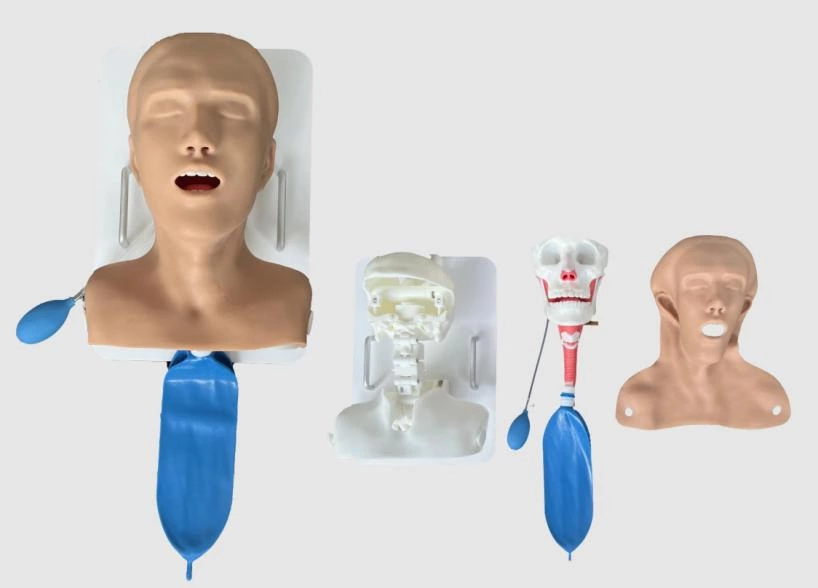 SC-LHX01 Upper Respiratory Tract Simulation Model[/caption]
Yes. Advanced patient simulators (such as Laerdal SimMan, SimBaby, or CAE Airway Trainers) are designed specifically to simulate airway emergencies.
They achieve this using pneumatic or mechanical actuators that press the simulated vocal cords together or inflate laryngeal bladders, creating complete or partial airway obstruction to mimic a true laryngospasm during clinical training scenarios.
2. Standard Task Trainers & Static Anatomical Models
No. Basic benchtop airway task trainers (used for practicing simple mask ventilation or intubation) typically have static anatomy.
They do not possess active vocal cord mechanisms or reactive muscular responses, meaning they cannot dynamically simulate laryngospasm.
3. Computational & Fluid Dynamics (CFD) Models
Usually no (unless custom-programmed). Standard 3D computational models of the upper respiratory tract model static airway geometry, airflow resistance, and particle deposition.
To simulate a laryngospasm in a digital model, the model must explicitly include time-varying dynamic glottic narrowing or fluid-structure interaction (FSI) to represent muscular contraction.
Key Takeaway: If you are working with an advanced high-fidelity clinical manikin, it likely has built-in features to simulate laryngospasm. If you are using a static task trainer or basic CFD model, it will not simulate dynamic vocal cord closure automatically.